Short Sales vs. Foreclosures in 2026: National Shift, California Impact
NAR data shows distressed sales remain a small share of the market, while short-sale activity is growing and short sales are recovering more value than foreclosures for the first time since 2018. Two tracks follow: one for California homeowners facing default, one for REALTORS nationwide.
By Gary Lee, REALTOR® | Founder and Lead Short Sale Negotiator | California DRE #01448722
Gary Lee has worked with distressed-property situations since 2007, including short-sale work, more than 100 REO listings, BPO and valuation experience, foreclosure-related transactions, and lender-facing transactions. He founded SacramentoShortSale.com and ShortSaleDealMaker.com.
The Short Answer: A Small Market, Moving in One Direction
If you are behind on your mortgage right now, the first thing to understand is what the newest market data does and does not mean for you. Short sales and foreclosures are increasing again, but this is not another 2008-style foreclosure crisis. Distressed sales remain a small percentage of the overall housing market. What is changing is that short-sale activity is growing, and that matters to homeowners who are behind on payments, have received a Notice of Default, have little or no equity, or are approaching a trustee sale.
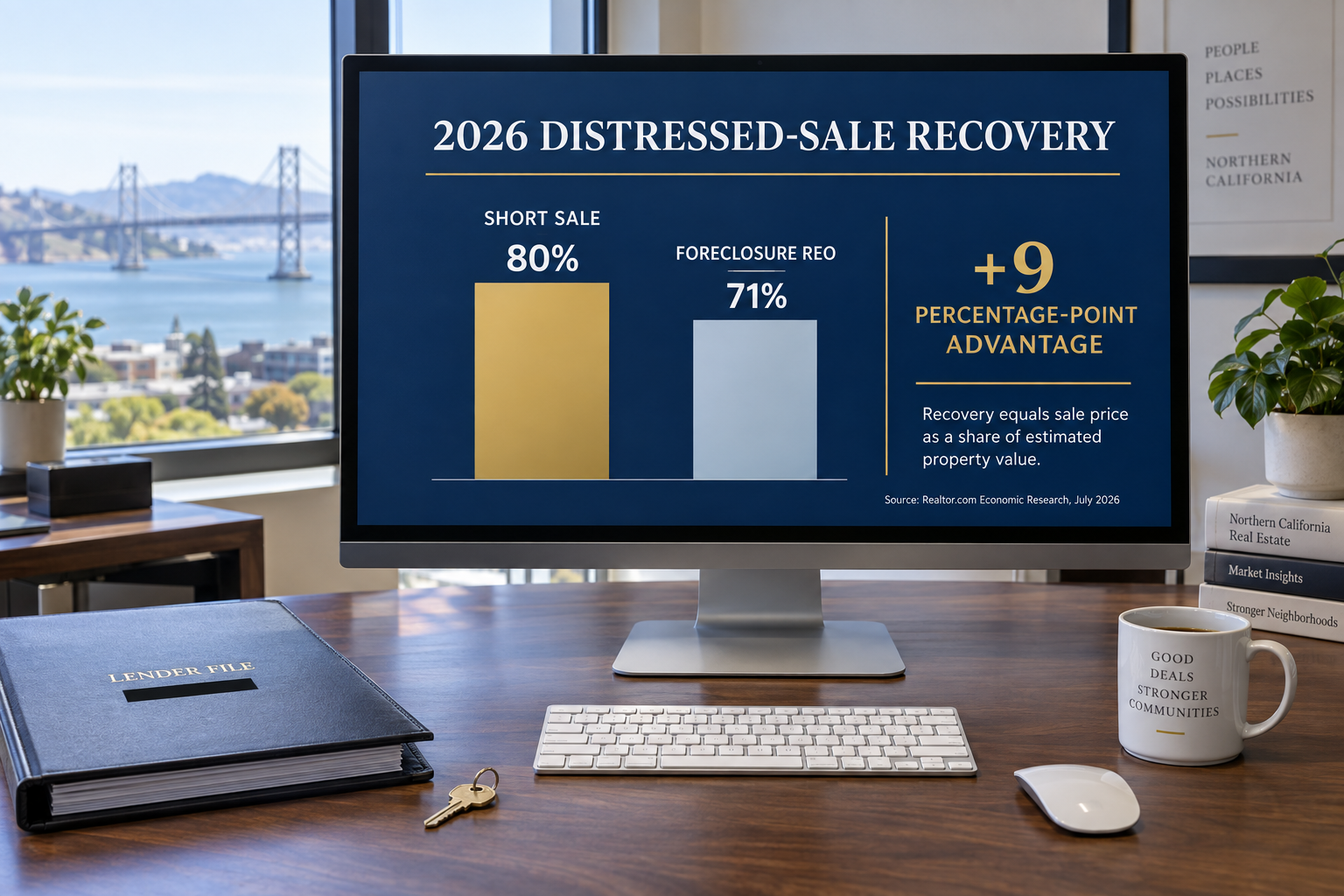
The data points in a clear direction: short-sale activity is accelerating, and since January 2026 short sales have been recovering more of a home’s value than foreclosures, the first time since 2018. That does not guarantee any single outcome, but for a homeowner facing default it means options still exist.
For a REALTOR, the new data is a reminder of where short-sale files actually fail. The errors that derail a transaction are usually specific and fixable: outdated bank statements that understate income, unsigned Dodd-Frank disclosures, and unverified junior liens that surface at the eleventh hour. Those are documentation problems, not market problems, and they are exactly what experienced short-sale coordination prevents.
What the Latest NAR Data Shows
The National Association of REALTORS tracks short sales and foreclosures as part of its market research, and the picture is measured, not alarming. NAR’s existing-home sales reports show distressed sales, the combination of foreclosures and short sales, running at roughly 2% of sales in March 2026, down from 3% the month before.
NAR has noted that as more homeowners exit forbearance, some will fall behind on their mortgages and many local markets will see a rise in distressed properties. The flow of distressed sales is still expected to remain a fraction of what it was during the Great Recession. That context matters: this is not 2008, but it is a market where preparation pays.
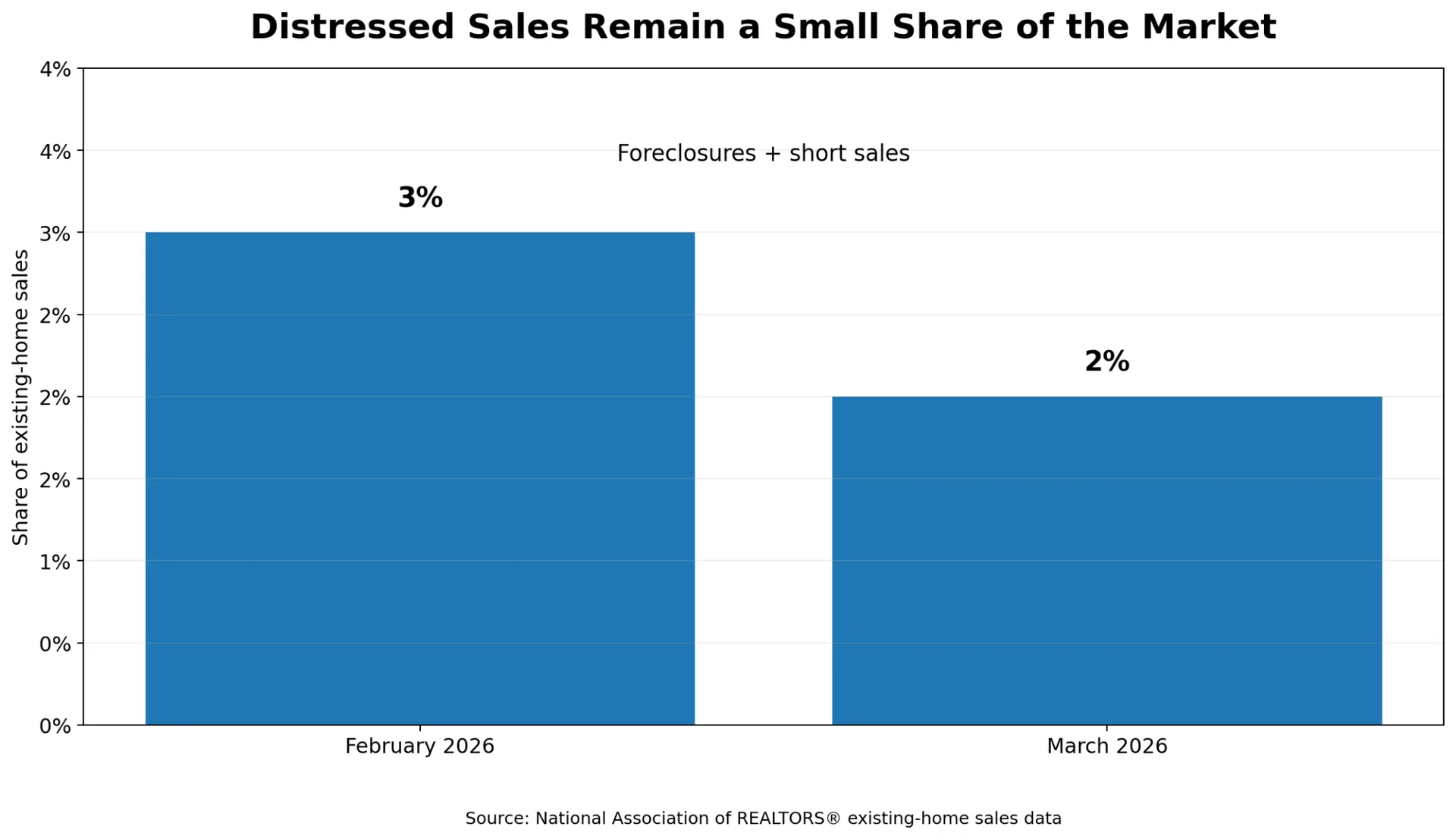
The important story is not that distressed properties dominate the market, because they do not; the important story is that distress is beginning to increase within certain homeowner situations even while the broader market remains relatively stable.
Short Sales Are Growing Again
According to the Realtor.com Distressed Property Index (Q1 2026), short sales remain a small corner of the housing market, fewer than 30,000 transactions a year, but they are accelerating. Short-sale transactions rose about 4% from 2023 to 2024, nearly 10% from 2024 to 2025, and roughly 16% year over year in the first quarter of 2026.
Even so, short sales still trail foreclosures by more than two to one as a distressed-sale type. For homeowners and agents who act early and build a strong file, that smaller, growing corner is exactly where opportunity sits.
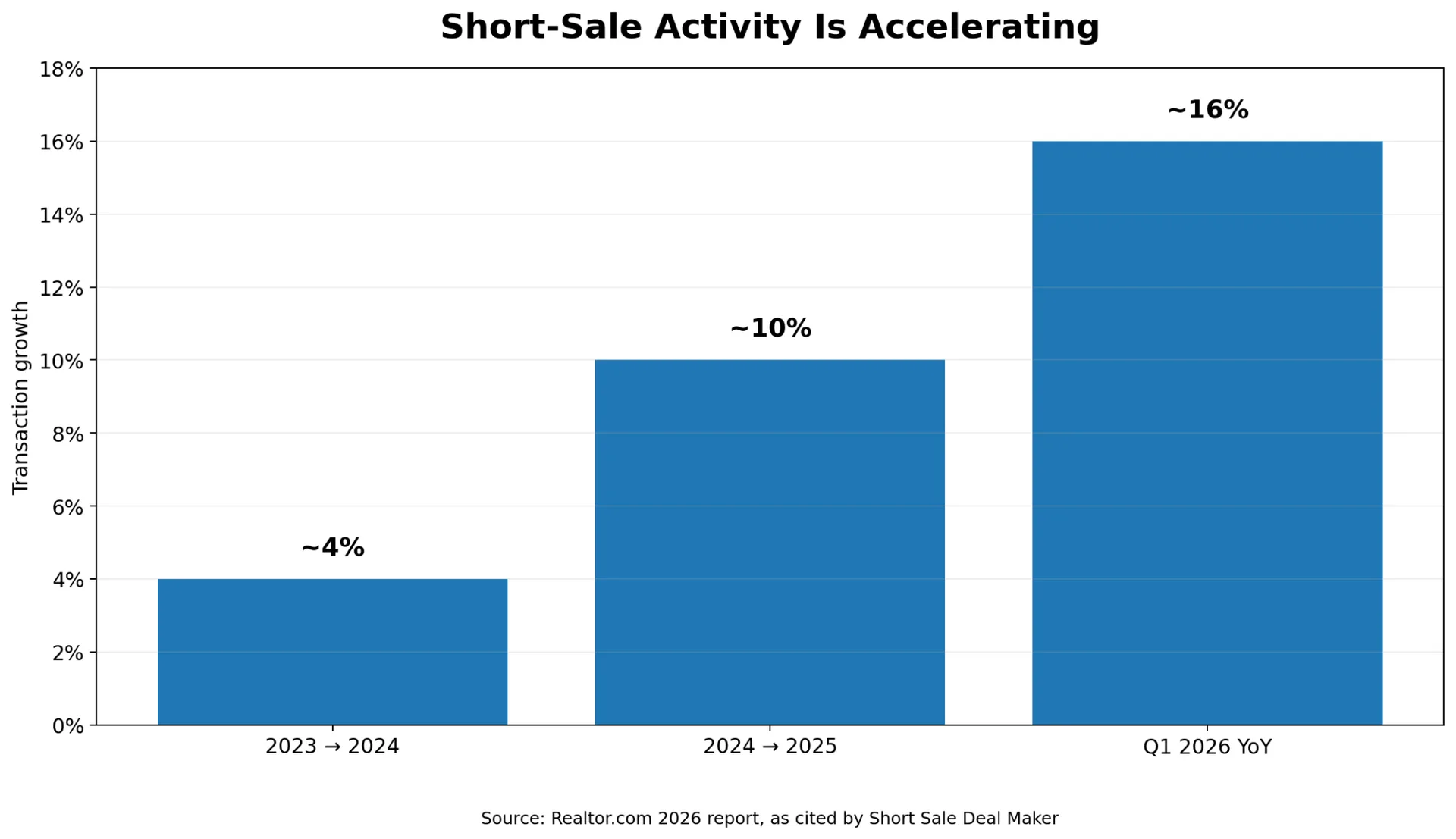
Growth from historically low levels does not mean short sales dominate the market, but it does change how servicers route these files. As short-sale volume climbs, every package is triaged on the same tests: current statements, signed disclosures, and verified lien positions. That is why building a complete file matters more, not less, as volume grows.
Short Sales Now Recover More Value Than Foreclosures
A notable shift took place in January 2026: for the first time since the Realtor.com Distressed Property Index began tracking these valuations in 2018, short sales started selling at a smaller discount than foreclosures. Distressed homes now fetch roughly 9% more of their estimated value as a short sale than as a foreclosure.
Foreclosed homes have typically sold 25% to 30% below estimated value, while the short-sale discount, which spiked near 50% in 2022, has fallen to about 20% by early 2026. The practical takeaway: a well-run short sale can preserve more of a home’s value than a foreclosure, for the seller, the lender, and the neighborhood.
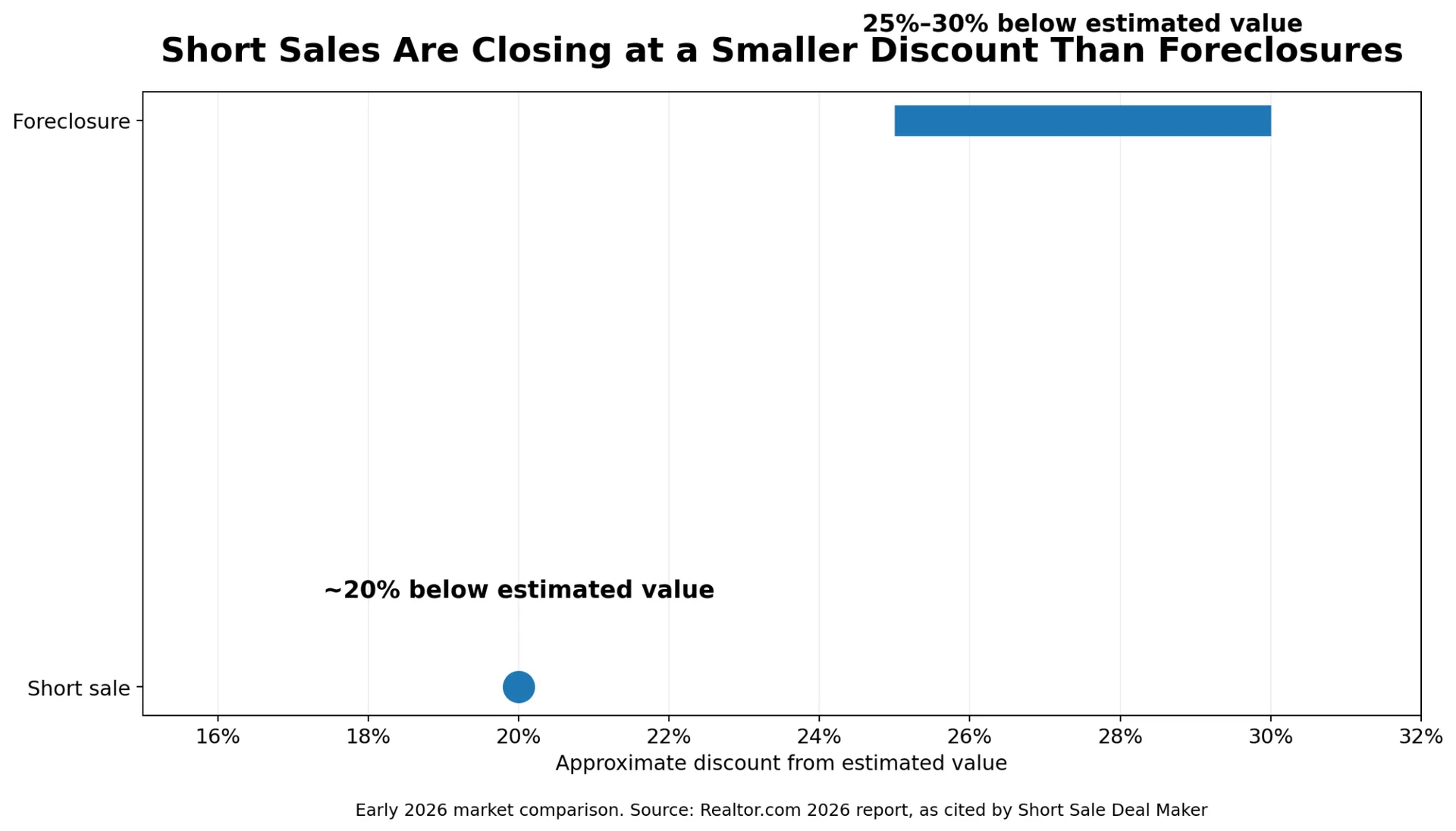
Averages never predict an individual property’s outcome, but the 20% short-sale discount versus a 25% to 30% foreclosure discount is a working number, not trivia. That gap is what a listing price, a BPO, and a servicer’s loss-mitigation review are all measured against, which is why pricing support and valuation documentation decide so many files.
What This Means for California Homeowners
If you own a home in California and are behind on payments or facing default, the new data reinforces the value of acting while you still have options. A short sale can sell the property for less than what is owed, with the lender’s agreement, and may recover more value than a foreclosure sale.
Timing and documentation matter. Under AB 2424, which amended California Civil Code § 2924f (AB 2424), a qualified listing agreement submitted in time may support a conditional postponement of a trustee sale; the purchase-agreement path is conditional on a prior postponement, and nothing is automatic. Every situation is different, so get professional advice on your specific facts; for a practical overview of what can actually stop or postpone a foreclosure, see our guide to ways to avoid foreclosure , and for a closer look at whether a California homeowner may still face a balance after a short sale, see our article on the California short-sale deficiency balance .
What This Means for Sacramento-Area Homeowners
National statistics cannot determine whether an individual Sacramento homeowner needs a short sale. Local property value matters, and so do: current mortgage balances, delinquent payments and accrued interest, second mortgages and HELOCs, down-payment-assistance liens, PACE assessments, property taxes and other recorded liens, estimated selling expenses, the current foreclosure stage, and the investor and servicer involved. For a closer look at what it can cost to sell, see our breakdown of seller costs in a Sacramento short sale .
A homeowner can technically have a valuable property and still face a short-sale situation once all liens and selling expenses are calculated. And someone who assumes they are underwater may discover they have enough equity for a traditional sale. That is why the numbers should be calculated before assuming a short sale is necessary.
Review My Short Sale SituationWhat This Means for REALTORS®
For real estate agents, the growing short-sale segment is a real opportunity to serve clients in distress and to protect your listings from falling into foreclosure. But short sales are documentation-heavy, servicer-driven transactions where small mistakes, a missed deadline, an incomplete package, can stall or sink a file. A properly trained short sale REALTOR® understands how to build the sale-side file: listing agreement, MLS exposure, pricing support, buyer activity, offers, escrow information, servicer communication, and the short sale package itself.
The REALTOR’s Role: Documentation Supports the Request
A properly trained short sale REALTOR® does not personally postpone a trustee sale, does not issue a legal stay, and is not foreclosure defense counsel. The trustee, beneficiary, servicer, or applicable law controls the postponement process. The REALTOR®’s job is to build and document the real estate side of the file, and that documentation may help support a postponement request when the facts and the law allow it; REALTORS® provide real estate information and transaction coordination only and never provide legal, tax, bankruptcy, or credit advice.
Short Sales Require More Than Putting a Home on the MLS
A short sale can involve communication and negotiation with mortgage servicers, investors, junior lienholders, title and escrow, foreclosure trustees, appraisers and BPO agents, and other parties. It is a coordination-heavy process where experience with the distressed side of the market shows up in how a file is built, documented, and moved.
Gary Lee has worked with distressed-property owners since 2007 and has handled more than 100 REO listings. He is a California REALTOR and has held the Certified Distressed Property Expert (CDPE) designation since 2009. That is the background behind the information on this page: it comes from someone who has worked through lender-facing, foreclosure-related, and short-sale transactions, not from a generic market summary.
Short Sales and Foreclosures in 2026: FAQs
Are short sales increasing in 2026?
Yes: short-sale transactions rose about 4% from 2023 to 2024, nearly 10% from 2024 to 2025, and roughly 16% year over year in the first quarter of 2026, per Realtor.com.
How common are distressed sales in 2026?
Distressed sales, foreclosures plus short sales, were about 2% of existing-home sales in March 2026, down from 3% the prior month, according to NAR.
Is the housing market heading back to 2008?
No. Distressed sales remain a small share of the market, and NAR expects the flow to remain a fraction of what it was during the Great Recession.
Is a short sale better than foreclosure?
Every situation differs; a well-run short sale may recover more value than a foreclosure, but homeowners should consult a California-licensed attorney, a tax professional, and a licensed REALTOR before deciding.
Can I do a short sale after receiving a Notice of Default in California?
Possibly. Acting early and building a documented file matters; review your specific situation with a licensed REALTOR and attorney.
Can I do a short sale if a trustee sale has already been scheduled?
Maybe, depending on the facts, timing, documentation, and the servicer; there is no guarantee, so act quickly and get professional advice.
How do I know whether I actually need a short sale?
Run the numbers: estimated property value, mortgage balances, all liens, and selling costs. A homeowner can be underwater only after those are calculated, so do not assume.
Can I sell normally if I am behind on my mortgage?
Possibly, if there is enough equity to cover what is owed plus selling costs; if there is not, a short sale or other option may be worth exploring with a licensed professional.
What happens to a second mortgage in a California short sale?
Junior liens must be addressed, negotiated, or resolved as part of the transaction; outcomes depend on the lienholder and the facts of the file.
Does listing a home for short sale stop a California foreclosure?
Not automatically. Under California's AB 2424, a qualified listing agreement may support a conditional postponement of a trustee sale, but nothing is guaranteed and the facts must be verified.
Frequently Asked Questions: 2026 Distressed Market
Do short sales hurt your credit as much as a foreclosure in California?
While both impact credit, a short sale typically allows homeowners to re-enter the housing market much faster. Under Fannie Mae and Freddie Mac lending guidelines, a borrower who completes a short sale can often qualify for a conventional mortgage in as little as 2 to 4 years, compared to a mandatory 7-year waiting period following a completed foreclosure.
How does California AB 2424 protect homeowners facing a trustee sale?
Signed into law to give homeowners more runway, California Assembly Bill 2424 amended Civil Code § 2924f. Under specific conditions, submitting a verified, qualified listing agreement with an MLS listing prior to the statutory deadline can grant a homeowner a conditional postponement of the trustee sale, giving their agent and negotiator time to secure a market-value buyer.
Why are banks accepting short sales at higher valuations than foreclosures in 2026?
Servicers and institutional investors lose significant capital in foreclosure proceedings due to eviction costs, property preservation, legal fees, vandalism, and prolonged vacancy. A short sale keeps the home occupied, maintained, and marketed through standard MLS channels, netting the investor an average of 9% more of the home's value compared to a liquidated REO auction.
Last reviewed and updated: September 15, 2026