Will You Still Owe the Bank After a California Short Sale?
The short answer is no for the ordinary qualifying California residential short sale. When a short sale involving a one-to-four-unit dwelling closes in accordance with the mortgage holder's written consent, title is voluntarily transferred through a recorded conveyance, and the agreed proceeds are delivered to the holder, California Code of Civil Procedure section 580e provides that no deficiency is owed or collected and no deficiency judgment may be sought. The protection comes from California law; the approval letter does not have to voluntarily create it.
By Gary Lee, REALTOR | Founder and Lead Short Sale Negotiator | California DRE #01448722
Gary Lee has worked with homeowners in mortgage default since 2007, has experience involving hundreds of properties in mortgage default, has been a licensed California REALTOR for more than 20 years, completed CDPE coursework in 2009, and founded both SacramentoShortSale.com and ShortSaleDealMaker.com.
The Short Answer: Section 580e, Written Approval, and the Things It Does Not Cover
The short answer is no for the ordinary qualifying California residential short sale. When a short sale involving a one-to-four-unit dwelling closes in accordance with the mortgage holder's written consent, title is voluntarily transferred through a recorded conveyance, and the agreed proceeds are delivered to the holder, California Code of Civil Procedure section 580e provides that no deficiency is owed or collected and no deficiency judgment may be sought. The protection comes from California law; the approval letter does not have to voluntarily create it.
Separate debts that are not covered by section 580e, nonconsenting lienholders, guarantors, other collateral, entity borrowers, fraud or waste claims, and obligations such as property taxes, HOA assessments, judgments, solar contracts, and PACE assessments require separate analysis.
I have worked with homeowners in mortgage default since 2007, and the most common worry I hear is a simple one: after I sell for less than I owe, can the bank still come after me? This article explains what section 580e provides, where the written approval comes in, and the important gaps that still need attention.
What a Deficiency Is
Start with the word. A potential deficiency is the portion of the secured debt remaining unpaid after the holder receives the proceeds allocated to it under the approved transaction. It is not always calculated simply by subtracting the gross sale price from the loan balance. If you owe $400,000 and the approved sale brings in $350,000, the $50,000 gap is the potential deficiency.
Without special protection, a lender could try to collect that unpaid balance from the borrower personally, and in some states it could get a deficiency judgment against you. The question for this article is whether California law changes that picture after a short sale, and the answer for a qualifying transaction that closes in accordance with the holder's written consent is that it does: section 580e bars the consenting holder from collecting the mortgage deficiency.
What CCP Section 580e Provides for a Qualifying Short Sale
California Code of Civil Procedure section 580e is the state's short-sale anti-deficiency statute. Section 580e may apply if the statutory requirements are satisfied. The current official text is available on the California Legislative Information website . In plain English, for a loan secured by a deed of trust or mortgage on a dwelling of not more than four units, when the borrower sells the home for less than the amount owed, title is voluntarily transferred through a recorded conveyance, the agreed sale proceeds are tendered to the holder, and the holder has given written consent to the sale, then no deficiency is owed or collected, and no deficiency judgment may be requested or rendered. After a qualifying transaction closes in accordance with that consent, section 580e bars the consenting holder from collecting the mortgage deficiency.
For a note secured solely by a deed of trust or mortgage on a one-to-four-unit dwelling, §580e(a)(1) states that no deficiency is owed or collected when the statutory requirements are satisfied. When a note is also secured by other property or collateral, §580e(a)(2) provides different treatment, and the rights involving that other collateral, guarantors, or additional obligors require separate legal review.
For a transaction governed by section 580e, the holder may not require the borrower to pay additional compensation beyond the sale proceeds in exchange for written consent to the short sale. A demand for a borrower contribution or new promissory note as the price of consent should be reviewed immediately by a California attorney.
Why Written Lender Approval Is Essential
The protection in section 580e is tied directly to a qualifying short sale that closes with the holder's written consent. Without that written approval, the anti-deficiency protection does not attach in the same way. A verbal conversation, a phone call, or a general willingness to look at an offer is not the same as a written consent to the sale.
The short sale also has to actually close, and close according to the approval. If the short sale does not close and the property instead goes through a nonjudicial trustee's sale, section 580e no longer governs because no short sale occurred. Section 580d generally bars the foreclosing lender from collecting a deficiency on the foreclosed note. A separate junior lender that did not conduct the foreclosure may require additional analysis under section 580b, section 580d, the loan documents, and other California law. This is why the approval letter and the final closing documents matter so much, and why a short sale should never be treated as a sure thing until it is recorded. The California short-sale representation page explains how The Gary Lee Team handles the approval process for homeowners.
How the Principal California Protections Compare
The table below compares the principal California protection for each common event: a qualifying short sale, a nonjudicial trustee's sale, a purchase-money loan, a judicial foreclosure, a sold-out junior, and a consenting junior in a qualifying short sale.
| Event | Principal California protection | Basic result |
|---|---|---|
| Qualifying short sale | CCP section 580e | Consenting mortgage holder cannot collect the deficiency |
| Nonjudicial trustee's sale | CCP section 580d | Foreclosing lender cannot collect a deficiency on the foreclosed note |
| Purchase-money loan | CCP section 580b | Deficiency protection may apply independently of the sale method |
| Judicial foreclosure | Other anti-deficiency and fair-value rules | A deficiency may be possible unless another statutory protection bars it |
| Sold-out junior after senior foreclosure | Depends on the junior note and other protections | Junior debt requires separate analysis |
| Consenting junior in qualifying short sale | CCP section 580e | Junior holder cannot collect the remaining mortgage deficiency |
This table is a general California framework, not a determination regarding a particular note, guarantor, property, or borrower.
First Mortgages, Second Mortgages and HELOCs
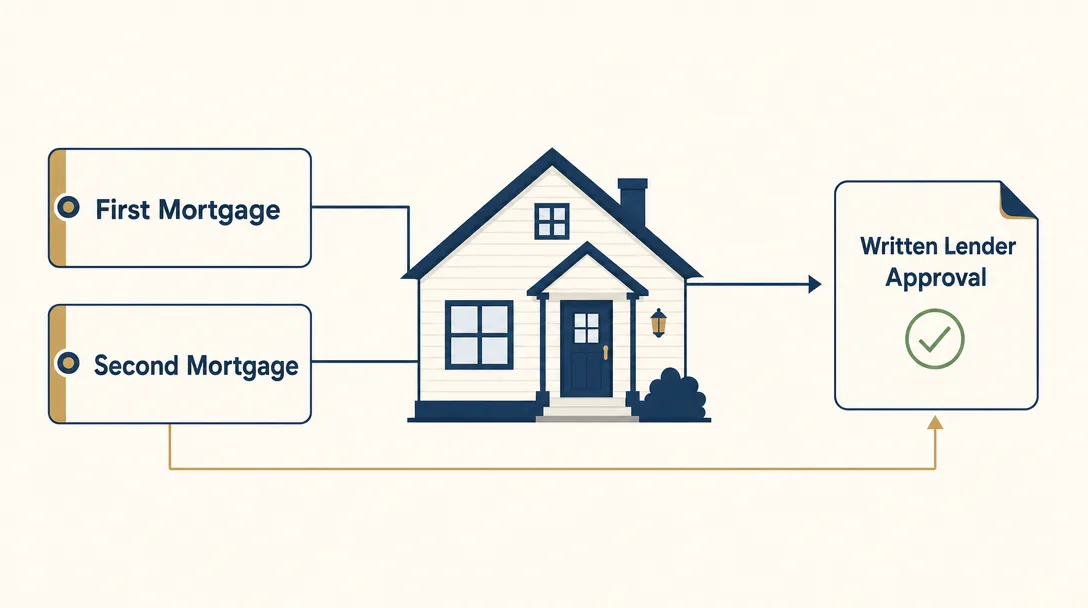
Most people carry more than one loan, and each one is a separate debt with its own holder. A first mortgage, a second mortgage, and a home equity line of credit are three different obligations, and each lienholder has to be addressed in the transaction.
Section 580e is not limited to the first mortgage. When a second-mortgage or HELOC holder has a qualifying note secured by the dwelling and gives written consent to the short sale, the statute's anti-deficiency protection applies to that consenting holder as well. The junior lien must still be addressed and released so that the sale can convey the required title, but after a qualifying closing the consenting junior holder cannot collect the remaining mortgage deficiency from the borrower.
If a junior lienholder never consents to the short sale, section 580e's protection should not be assumed for that debt. The transaction ordinarily cannot close with clear title until that lien is addressed. The junior liens and HELOCs guide walks through how second-position holders behave and how they are negotiated.
Why Every Secured Lienholder Must Be Addressed
A short sale cannot close if the title cannot be delivered cleanly. Every lienholder whose debt is not fully paid at closing must consent to accept less than the full amount, or the sale stalls. That includes the first mortgage, any junior mortgages, and any recorded liens that attach to the property.
So the approval work is not just about the first lender. It is about assembling every claim, getting each holder to approve its own terms, and making sure the settlement statement clears each payoff. If one lienholder is left out, that lien can follow the property or the borrower after the sale. The HOA liens and title problems guide covers the ones that most often stall a file.
The Difference Between Releasing a Lien and Releasing Personal Liability
Releasing a lien and eliminating personal liability are ordinarily distinct legal concepts. A reconveyance clears the lender's security interest from the property. In a qualifying California short sale, however, section 580e separately bars the consenting holder from collecting the remaining mortgage deficiency even if the approval letter does not contain a specially negotiated personal-liability release. The recorded conveyance, written consent, delivery of proceeds, and other statutory conditions still must be satisfied.
The distinction still matters when you read your own documents, because a lien release and a personal-liability release are not the same event in every context. The short-sale deficiency and debt release guide in the Knowledge Center goes deeper into how lien release and personal liability are kept separate.
What the Approval Letter Should Say
The approval letter remains critically important because it establishes the holder's written consent and the conditions under which the transaction must close. However, in a transaction that satisfies section 580e, the statutory protection does not depend on the lender generously inserting its own deficiency waiver. California law provides the protection, and section 580e makes a purported waiver of that protection void.
The approval letter should still be reviewed to confirm the correct borrower, loan, property, approved price, proceeds, closing deadline, lien release, and absence of inconsistent or prohibited demands.
If the letter contains language purporting to preserve a mortgage deficiency, impose a new note, require additional compensation, or waive section 580e, obtain review from a California real-estate attorney before signing. A qualifying borrower's statutory protection cannot be waived.
The final settlement statement will also reflect the actual payoffs and the actual amounts cleared at closing. The approval letter and the settlement statement together tell the real story, and the short-sale approval letter guide explains how to read one closely.
Fraud, Waste, and the Limits of Section 580e
Section 580e is not unlimited, and its boundaries deserve precision. Fraud connected with the short sale may support a damages claim. Waste, or willful damage to the secured property, may also support a damages claim. These are not deficiency exceptions; the statute preserves claims for damages based on that conduct. This is one reason the Short Sale Deal Maker team will not participate in a transaction that is not an arm's-length, truthful short sale.
Section 580e does not apply when the borrower is a corporation, LLC, limited partnership, or political subdivision. Certain bonds, public-utility obligations, guarantors, sureties, other collateral, and notes not secured solely by the dwelling can involve different rules.
Section 580e also does not erase property taxes, HOA obligations, judgments, solar contracts, PACE assessments, unsecured debts, or unrelated obligations. And a transaction that never closes does not receive completed-short-sale protection: if the sale never happens, or the property is lost through a trustee's sale instead, the short-sale anti-deficiency rule does not step in the same way. No one should promise that section 580e protects every property and every obligation, because it does not.
Why HOA Claims, Tax Liens, Judgments, Solar Contracts and PACE Assessments Are Separate
Section 580e is about mortgage deficiencies. It does not sweep up every other obligation connected to the property. Property taxes that are due, HOA assessments and delinquencies, recorded judgments, and mechanic's liens each attach and operate on their own terms.
Solar leases and power purchase agreements do not always transfer cleanly to a buyer, and a PACE assessment is repaid through property taxes and stays with the property. None of these disappear just because the mortgage deficiency is protected. Each one must be identified, negotiated, and resolved at closing, and some can still be pursued separately from the mortgage. The HOA liens and title problems guide explains how these sit apart from the mortgage stack.
Why a 1099-C Is a Tax-Reporting Issue, Not a Lender's Deficiency Lawsuit
After a short sale, you may receive a Form 1099-C, the form used to report canceled debt to the IRS. It is easy to read that as proof the debt is gone. It is not.
A 1099-C is a tax-reporting document. It says the lender reported a discharge of indebtedness for tax purposes, and canceled debt can sometimes be treated as taxable income. It is not a deficiency waiver, it is not a court judgment, and it does not, by itself, prove you owe nothing or that you are protected from collection. The tax question and the loan-liability question are separate, and both deserve their own professional review.
The tax side of forgiven debt is a topic of its own, with rules that change over time, and I cover it separately because it deserves its own careful look rather than a few sentences tucked into a deficiency article. Speak with a CPA or enrolled agent about your specific tax situation.
Questions the Seller Should Ask Before Accepting Approval Terms
Before you agree to anything, ask these questions and get the answers in writing:
-
Is this approval in writing, from the holder of each relevant lien?
-
Which liens and which payoff amounts does it cover?
-
Does the approval clearly evidence the written consent of every mortgage holder participating in the short sale?
-
Does it identify the correct borrower, loan, property, approved proceeds, closing deadline and lien-release terms?
-
Does it contain language purporting to preserve a mortgage deficiency, impose a new promissory note, require additional borrower compensation or waive §580e?
-
Is the lender demanding a cash contribution, a new promissory note, or any additional compensation beyond the sale proceeds as the price of approval?
-
What happens if the sale does not close by the deadline?
The approval and closing documents establish whether the transaction satisfies §580e's conditions. The anti-deficiency protection comes from California law, not from the lender's voluntary decision to grant it. Any document containing inconsistent deficiency, contribution, new-note or waiver language should be reviewed by a California real-estate attorney before it is signed.
For a transaction governed by section 580e, the holder may not require the borrower to pay additional compensation beyond the sale proceeds in exchange for written consent to the short sale. A demand for a borrower contribution or a new promissory note as the price of consent should be reviewed immediately by a California attorney.
When Legal Advice Is Appropriate
Gary Lee and the Short Sale Deal Maker team are real estate professionals. We provide real-estate information and short-sale transaction coordination, but we are not attorneys, CPAs, or tax professionals, and we do not give legal, tax, or bankruptcy advice.
When the question is about personal liability, a possible deficiency judgment, a bankruptcy option, or how a 1099-C affects your taxes, that is the moment to bring in a licensed California real estate attorney, a bankruptcy attorney, a CPA or enrolled agent, or a HUD-approved housing counselor. The right professional for the question depends on your situation, and this article is education, not a substitute for that conversation.
California Short-Sale Deficiency FAQs
Will I still owe money to my first mortgage lender after an approved California short sale?
If the short sale is a qualifying one, California Code of Civil Procedure section 580e bars the consenting holder of the deed of trust or mortgage from collecting the mortgage deficiency from the borrower. The protection applies when the loan is secured solely by a deed of trust or mortgage on a one-to-four-unit dwelling, title is voluntarily transferred through a recorded conveyance at closing, the agreed sale proceeds are tendered, and the lender gave its written consent to the sale. The written approval and the way the transaction actually closes matter, so nothing is automatic until the sale closes as approved.
Can a consenting second-mortgage or HELOC lender collect the remaining balance after a qualifying California short sale?
No. When the junior lender gives written consent and the transaction satisfies the requirements of California Code of Civil Procedure §580e, the junior lender cannot collect the remaining mortgage deficiency from the borrower. The junior lien must still be addressed and released for the sale to close. A junior debt whose holder did not consent, a debt secured by other collateral, a guaranty, or an obligation outside §580e requires separate legal analysis.
What is the difference between releasing a lien and releasing my personal liability?
Releasing a lien removes the lender’s security interest from the property. Releasing personal liability ordinarily concerns the lender’s ability to collect from the borrower. They are distinct legal concepts. However, after a qualifying California short sale, §580e separately bars the consenting mortgage holder from collecting the remaining deficiency even when the lien-release document itself does not expressly grant a personal-liability release. The documents should be reviewed to confirm that each holder consented and that the transaction closed according to the approved terms.
If the lender approves the qualifying short sale and releases its deed of trust, can it collect the remaining mortgage balance from me?
Section 580e says no deficiency is owed or collected when the statutory requirements are satisfied. The protection comes from California law and does not depend solely on whether the approval letter uses the words "full release of personal liability." The approval and closing documents should nevertheless be reviewed to verify that the lender consented and that the sale closed according to the approved terms.
Does receiving a 1099-C mean the lender has forgiven my debt?
No. A 1099-C is a tax-reporting document that reports canceled debt to the IRS. It is not a deficiency waiver and it is not a court judgment. It may mean a lender reported a debt discharge for tax purposes, but it does not, by itself, prove you owe nothing, and it does not decide whether you are protected from collection. Tax treatment and loan liability are separate questions.
Can my lender still pursue me if I sold short without written approval?
Possibly. The anti-deficiency protection in section 580e is tied to a qualifying short sale that closes with the holder’s written consent. If there was no qualifying written approval, the protection may not apply, and the lender’s rights depend on the loan documents and other law. Every file is different, and that is exactly when professional and legal review matters.
Does California’s short-sale anti-deficiency law protect every property and every obligation?
No. The protection in section 580e is specific. It applies to qualifying short sales of one-to-four-unit dwellings that close according to the written approval. It does not automatically cover every property type, every loan, or separate obligations such as HOA fees, property taxes, judgments, solar contracts, or PACE assessments.
Last reviewed and updated: September 2026